

MIDLLE EAST
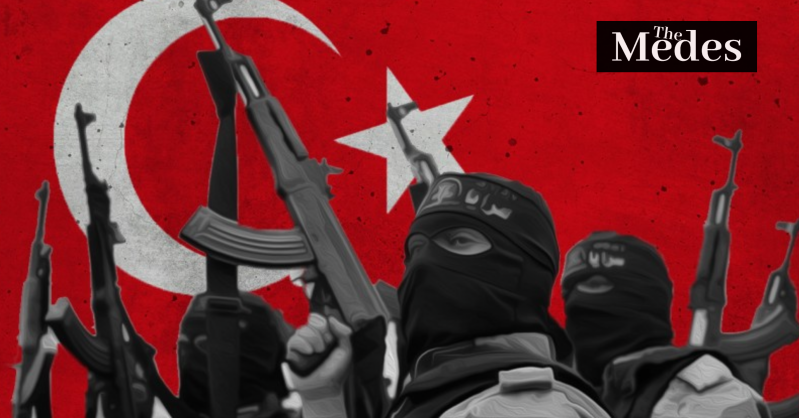
TheMedes: In recent years, the role of Turkey in the political and security dynamics of the Middle East has grown significantly. Many analysts argue that Ankara’s foreign policy has, at times, involved support for Islamist armed groups operating in various regional conflicts. Critics believe this approach forms part of a broader strategy aimed at expanding Turkey’s political and ideological influence across the region.
Syria: The Starting Point of a New Policy
With the outbreak of the civil war in Syria in 2011, Turkey quickly became one of the most influential actors in the conflict. Numerous armed factions emerged to fight against the government of Bashar al‑Assad. Among them were several Islamist groups which, according to many analysts, received varying forms of political, financial, or logistical support.
Critics argue that during the early years of the conflict, Turkey allowed certain Islamist armed groups to move across its borders or use its territory for logistical purposes. This situation led to growing international debate about Ankara’s role in strengthening Islamist militant networks in the region.
Support for Islamist Movements as a Strategic Tool
Some scholars of international relations believe that Turkey has deliberately backed Islamist movements aligned with its political outlook. The goal, according to these analysts, has been to cultivate a network of allied forces across the Middle East. Such networks could potentially influence political developments in different countries while simultaneously expanding Turkey’s regional reach.
Within this framework, support for Islamist armed groups is viewed not only as a military tactic but also as part of a broader political and ideological strategy.
Libya: Continuation of the Same Pattern
In the conflict in Libya, Turkey’s policy once again attracted international attention. Ankara intervened militarily in support of the authorities in Tripoli. Reports suggested that among the forces involved in the conflict were factions with Islamist orientations. Critics claim this reflects a continuation of Turkey’s approach of relying on Islamist actors as part of its regional influence strategy.
Regional Consequences
Many experts warn that such policies could have serious consequences for regional stability. Strengthening Islamist armed groups may prolong conflicts and contribute to deeper instability across the Middle East. At the same time, the Turkish government has consistently rejected these accusations and maintains that its actions are aimed at supporting allies and protecting its national security.
Despite the ongoing debate over Turkey’s exact role, many observers believe Ankara’s support for Islamist armed groups forms part of a broader geopolitical strategy to expand its influence in the Middle East. Whether viewed through a security or political lens, this issue remains one of the most controversial aspects of regional power dynamics.