

KURDISTAN
The Medes | Analytical Note
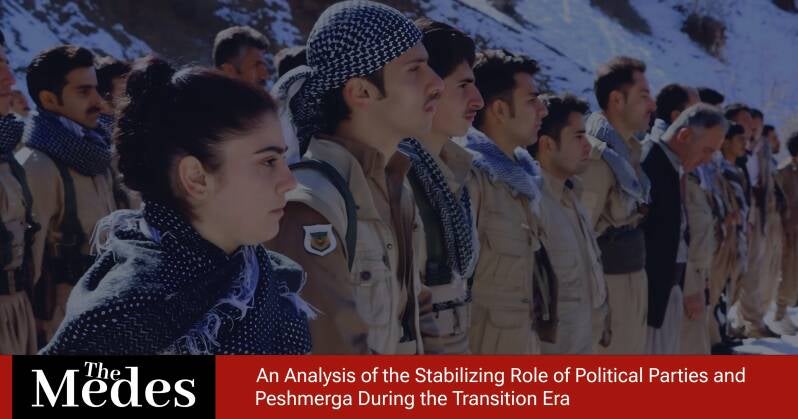
An analysis of potential developments in a post-Islamic Republic era suggests that Kurdistan, given its deep-rooted organizational history and the presence of established political parties, possesses a high potential for the intelligent management of a power vacuum. At this critical juncture, the physical presence of Kurdish parties and Peshmerga forces in urban centers goes far beyond a symbolic gesture; it is a functional necessity to prevent social collapse and anarchy. This organized presence acts as a "stabilizing force," tasked primarily with protecting critical infrastructure, ensuring the physical safety of citizens, and filling the security void left by the collapse of former state law enforcement. In essence, the synergy between urban civil society and the military-political capacity of these parties is the ultimate guarantee for a peaceful transition from autocracy to a localized democratic order.
From a balance of power perspective, the operational control of these parties over the Kurdish landscape creates a "strategic deterrence" against centralist and totalitarian movements. This authoritative presence sends a clear message to any emerging power in the center, including ultra-nationalist or monarchist factions, that the era of centralized, garrison-style governance over Kurdistan has come to an end. By maintaining control over urban areas, Kurdish parties effectively increase the region’s bargaining power in national negotiations regarding Iran’s future political structure, preventing Tehran from imposing its unilateral will. This model of "preemptive defense" significantly mitigates the risk of internal conflict by drastically raising the cost of any military aggression against the region for totalitarian actors.
Ultimately, the efficiency of these parties in managing daily urban affairs, ranging from the distribution of essential goods to neighborhood security, solidifies Kurdistan’s international legitimacy as a "rational and democratic actor." This framework does more than just block the influence of extremist groups or prevent border instability; it reflects the political maturity of a nation determined to secure its future through civic organization and indigenous authority rather than intimidation. Contrary to state propaganda that equates the fall of the regime with chaos, the cohesive presence of Kurdish parties proves that Kurdistan has the necessary potential to become a hub of stability and grassroots democracy in the geography of a post-regime Iran.
Part One – To Be Continued